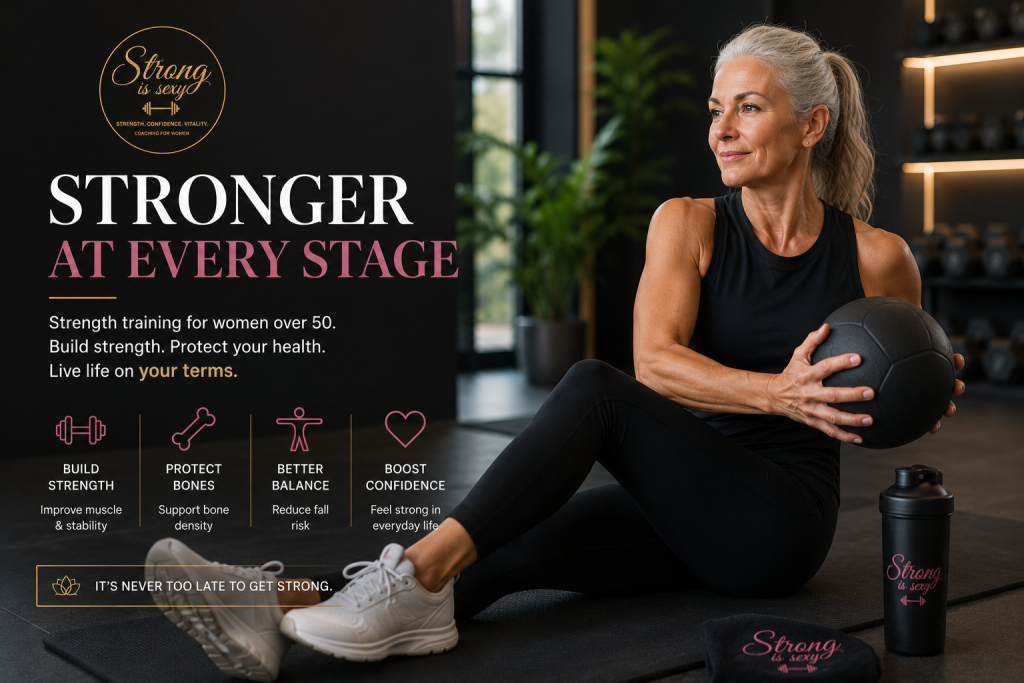
Turning 50 doesn’t mean slowing down for many women; it’s exactly the point where strength training becomes more important than ever. Yet finding a strength coach for women over 50 who genuinely understands the specific needs of this stage of life, bone health, joint care, hormonal changes well past menopause, and realistic progression can feel surprisingly difficult. Most fitness content and coaching is still built around younger clients or generic weight-loss goals, leaving a real gap for women who want to train seriously, safely, and effectively in their 50s and beyond.
This guide covers exactly why strength training matters so much after 50, what a specialised coach does differently, and how to get started safely, no matter your current experience level.
Why Strength Training Becomes Even More Important After 50
By your 50s, most women are several years into or past menopause, meaning the accelerated muscle and bone loss associated with declining oestrogen has already been underway for some time. Left unaddressed, this leads to:
- Continued loss of muscle mass and functional strength
- Increased risk of osteoporosis and fractures
- Reduced balance and mobility, increasing fall risk
- Slower metabolism and changes in body composition
- Reduced independence in daily activities over time
Strength training is one of the most effective, evidence-based tools available to directly counter every one of these changes, and it’s never too late to start seeing meaningful benefits, even if you’ve never lifted a weight before.
What Makes Coaching for Women Over 50 Different
1. A Strong Emphasis on Bone Health
Since osteoporosis risk increases significantly with age, particularly post-menopause, a specialised coach prioritises weight-bearing and resistance exercises specifically shown to support bone density, rather than generic programming that overlooks this.
2. Joint-Conscious Progression
Years of life, previous injuries, or joint wear mean training needs to be introduced thoughtfully. A good coach adjusts exercise selection and progression to protect joints while still building genuine strength, rather than pushing intensity that risks injury.
3. Realistic, Confidence-Building Progression
Whether you’re a complete beginner or returning to training after years away, a specialised coach starts wherever you currently are and builds progressively, ensuring you build confidence alongside physical capability.
4. Nutrition Support for This Life Stage
Protein needs remain high (or increase) to support muscle preservation well past menopause. A coach who understands this stage of life integrates practical nutrition guidance alongside training, rather than treating them separately. For a deeper look at how nutrition and training work together to address hormone-related weight changes, our guide on nutrition coaching for menopause weight gain breaks down the practical strategies that remain relevant well into your 50s and beyond.
5. Understanding That Perimenopause Effects Can Linger
Many women continue experiencing symptoms related to hormonal changes well into their 50s. A coach with genuine experience in this area understands how these lingering effects influence recovery, energy, and training response. Our guide on personal training for perimenopause in the UK explains these hormonal considerations in more depth, many of which remain relevant beyond the perimenopause transition itself.
Common Myths That Stop Women Over 50 From Strength Training
“I’m too old to start now.” Research consistently shows women in their 50s, 60s, and beyond can build meaningful strength and muscle mass with consistent, progressive training. Starting later simply means starting where you are, not that it’s too late to benefit.
“Lifting weights will hurt my joints.” When programmed correctly, strength training actually supports joint health by strengthening the muscles that stabilise and protect them. The risk comes from poor form or inappropriate progression, not resistance training itself.
“I should focus on cardio instead.” While cardiovascular health matters, strength training is uniquely effective for preserving muscle and bone density, both major concerns after 50, in ways cardio alone cannot replicate.
“I need to lift heavy immediately to see benefits.” Progressive overload, gradually increasing challenge over time, matters far more than lifting maximally from day one. Consistency and gradual progression drive results safely.
How to Get Started Safely After 50
Step 1: Get a Clear Picture of Your Starting Point
A good coach begins with an honest assessment of your current mobility, any joint concerns or previous injuries, and baseline strength, ensuring your program is both safe and genuinely effective.
Step 2: Focus on Fundamental, Joint-Friendly Movements
A well-designed program typically includes:
- Squat variations adapted to your mobility (chair squats, goblet squats, leg press)
- Hinge patterns (supported deadlifts, glute bridges)
- Push and pull exercises (seated or supported chest press, assisted rows)
- Balance and core work, which becomes increasingly important for fall prevention
Step 3: Progress Gradually and Consistently
Small, steady increases in weight, reps, or sets over time rather than dramatic jumps build strength safely while minimising injury risk.
Step 4: Train 2–3 Times Per Week Consistently
Most women over 50 see excellent results training with resistance 2–3 times weekly, allowing adequate recovery between sessions while maintaining steady progress. For a broader look at structuring a full weekly approach to strength training, our guide on strength training for women over 40 in the UK offers a practical framework that applies just as effectively in your 50s and beyond.
Step 5: Prioritise Recovery and Sleep
Recovery becomes increasingly important with age. Adequate rest between sessions and quality sleep directly affect your ability to build strength safely and consistently.
What Results Can You Expect?
With consistent, well-structured training, many women over 50 notice:
- Within 2–4 weeks: improved energy, confidence, and a stronger sense of routine
- Within 6–8 weeks: noticeably improved strength and functional capability in daily activities
- Within 3–6 months: measurable improvements in muscle tone, bone-supporting strength, and overall physical confidence
- Long-term: better independence, reduced fall risk, and stronger protection against age-related muscle and bone loss
Consistency and appropriate progression matter far more than intensity. A sustainable, well-guided approach reliably outperforms sporadic, overly intense efforts.
Frequently Asked Questions
Is it safe to start strength training for the first time after 50?
Yes. With proper assessment, appropriate starting exercises, and gradual progression, strength training is safe and highly beneficial for women starting in their 50s, regardless of previous experience.
How does strength training help with osteoporosis risk?
Weight-bearing and resistance exercise stimulates bone remodelling, helping to maintain and support bone density, an important consideration as osteoporosis risk increases with age, particularly post-menopause.
Do I need special equipment to strength train after 50?
No. Strength training can be highly effective using resistance bands, light dumbbells, or bodyweight exercises, particularly when following a structured, progressive program suited to your current ability.
How often should women over 50 strength train?
Most women see excellent results training with resistance 2–3 times per week, allowing sufficient recovery between sessions while maintaining consistent, safe progress.
Can strength training help with balance and fall prevention?
Yes. Strength training, particularly when combined with balance-focused exercises, helps improve stability and reduces fall risk, which becomes an increasingly important consideration with age.
Strength Has No Age Limit
Working with a strength coach for women over 50 means training with genuine expertise in bone health, joint care, and realistic progression, helping you build real, lasting strength at any stage of life.
At Strong is Sexy, we specialise in helping women over 50 train safely and effectively, combining personalised strength coaching with practical nutrition guidance for lasting results.