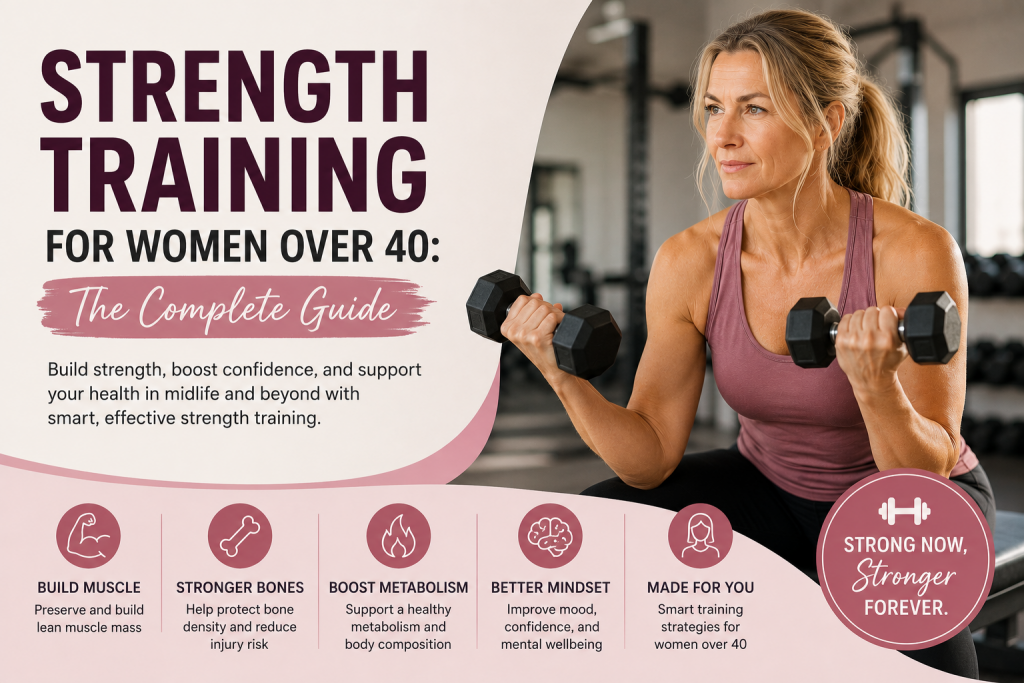
If you’ve searched for strength training for women over 40 in the UK, you’re likely noticing that your body doesn’t respond the way it used to. Maybe workouts that once worked have stopped delivering results, or you’ve heard that lifting weights matters more as you get older, but aren’t sure where to start. You’re asking the right question at the right time.
Strength training isn’t just beneficial for women over 40; it becomes essential. This guide breaks down exactly why, and gives you a practical, realistic framework for getting started or levelling up your current routine.
Why Strength Training Becomes Essential After 40
From your late 30s onward, your body naturally begins losing muscle mass in a process called sarcopenia, and this accelerates further during perimenopause and menopause as oestrogen declines. Left unaddressed, this can lead to:
- Reduced strength and functional capacity
- Slower metabolism
- Increased fat storage, particularly around the midsection
- Greater risk of osteoporosis and fractures
- Reduced insulin sensitivity
The good news: strength training directly counteracts every one of these changes. It’s one of the few interventions proven to preserve and even build muscle mass and bone density well into your 40s, 50s, and beyond.
The Science-Backed Benefits of Strength Training for Women Over 40
1. Preserves and Builds Muscle Mass
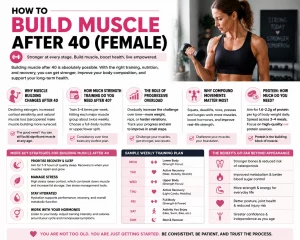
Without resistance training, women can lose 3–8% of muscle mass per decade after 30, with the rate accelerating further after 40. Progressive strength training directly counters this, helping you maintain the muscle you have and build new muscle even in midlife.
2. Protects Bone Density
Declining oestrogen during perimenopause and menopause significantly increases osteoporosis risk. Weight-bearing and resistance exercise stimulates bone remodelling, helping to protect bone density at a stage of life when it matters most.
3. Supports a Healthy Metabolism
Muscle tissue burns more energy at rest than fat tissue. By preserving and building muscle, strength training helps offset the natural metabolic slowdown that comes with age, making weight management considerably more achievable.
4. Improves Insulin Sensitivity
Resistance training improves your body’s ability to use insulin effectively, which becomes increasingly important as hormonal changes during menopause can otherwise reduce insulin sensitivity and increase fat storage.
5. Boosts Confidence and Mental Health
Beyond the physical benefits, strength training has a well-documented positive impact on mood, self-efficacy, and body confidence, helping many women feel more capable and in control during a stage of life that can otherwise feel unpredictable.
Common Myths That Stop Women Over 40 From Strength Training
“I’ll get bulky.” Building significant muscle mass requires years of dedicated training, specific nutrition, and often genetic predisposition. For most women, strength training builds a toned, strong physique, not bulk.
“I’m too old to start.” Research consistently shows women in their 40s, 50s, 60s, and beyond can build meaningful strength and muscle with consistent training. It’s genuinely never too late to start.
“Cardio is better for weight loss.” While cardio has its place, strength training is more effective for long-term metabolic health, muscle preservation, and body composition changes — especially during and after menopause.
“I need to lift heavy to see results.” Progressive overload (gradually increasing challenge over time) matters more than lifting extremely heavy from day one. Results come from consistency and progression, not immediately maxing out.
How to Get Started With Strength Training Safely
Step 1: Start With a Movement Assessment
Before diving into a program, understand your current mobility, any injuries or limitations, and baseline strength. This helps ensure your program is both effective and safe from the outset.
Step 2: Focus on Fundamental Movement Patterns
A well-rounded strength program for women over 40 should include:
- Squat patterns (bodyweight squats, goblet squats, leg press)
- Hinge patterns (deadlifts, glute bridges, Romanian deadlifts)
- Push patterns (push-ups, chest press, overhead press)
- Pull patterns (rows, lat pulldowns, assisted pull-ups)
- Core stability work (planks, dead bugs, anti-rotation exercises)
Step 3: Prioritise Progressive Overload
Progress doesn’t need to be dramatic week to week. Gradually increasing weight, reps, or sets over time, even small increments, is what drives long-term strength and muscle gains.
Step 4: Train 2–4 Times Per Week
Most women see excellent results training with resistance 2–4 times weekly, allowing adequate recovery between sessions while maintaining consistent progressive stimulus.
Step 5: Prioritise Recovery and Sleep
Recovery becomes increasingly important with age. Adequate sleep, rest days, and stress management all directly impact your ability to build strength and recover between sessions.
Sample Weekly Strength Training Structure
Here’s an example of how a balanced week might look for a woman over 40 getting started:
- Monday: Full-body strength (squat, push, pull focus)
- Wednesday: Full-body strength (hinge, core, upper body focus)
- Friday: Full-body strength (mixed patterns, slightly higher volume)
- Weekend: Light walking, mobility work, or active recovery
This structure allows for adequate recovery between sessions while maintaining consistent progressive training a realistic approach for busy schedules.
Nutrition Considerations to Support Strength Training
Training alone isn’t enough; nutrition plays a critical supporting role, particularly around protein intake:
- Prioritise protein – aim for roughly 1.6–2.2g per kg of bodyweight daily to support muscle repair and growth
- Don’t under-eat – chronic under-eating undermines recovery and can accelerate muscle loss, counteracting your training efforts
- Stay hydrated – supports recovery, energy, and overall performance
- Consider timing – a protein-rich meal or snack within a couple of hours of training supports recovery, though total daily intake matters most
Why Working With a Coach Can Accelerate Results
While it’s entirely possible to start strength training independently, working with a coach who specialises in training women over 40 offers real advantages:
- Personalised programming based on your current fitness level, goals, and any limitations
- Proper form guidance, reducing injury risk as you increase weights over time
- Accountability and structure, keeping you consistent even during busy periods
- Nutrition guidance tailored to support your training and hormonal stage of life
- Ongoing adjustments as your strength and circumstances change
This is particularly valuable for women navigating perimenopause or menopause, where training and nutrition needs shift and benefit from expert, personalised guidance rather than generic programs.
How Long Until You See Results?
Most women notice improvements in energy and mood within the first few weeks of consistent strength training. Visible strength gains typically become apparent within 4–6 weeks, while noticeable changes in body composition and muscle definition generally develop over 8–12 weeks of consistent training and adequate nutrition.
Patience and consistency matter far more than intensity; sustainable, progressive training wins over short-term extreme approaches every time.
Frequently Asked Questions
Is it safe to start strength training for the first time over 40?
Yes. With proper form, appropriate starting weights, and progressive programming, strength training is safe and highly beneficial for women starting in their 40s, 50s, and beyond.
How many times a week should women over 40 strength train?
Most women see excellent results training with resistance 2–4 times per week, allowing sufficient recovery time between sessions while maintaining consistent progress.
Will strength training help with menopause weight gain?
Yes. Strength training helps preserve and build muscle mass, which supports a healthier metabolism and can help offset weight gain commonly associated with menopause-related hormonal changes.
Do I need a gym membership to strength train effectively?
No. Strength training can be highly effective at home with resistance bands, dumbbells, or even bodyweight exercises, particularly when following a well-structured, progressive program.
How quickly will I see results from strength training after 40?
Most women notice improved energy and mood within a few weeks, visible strength gains within 4–6 weeks, and noticeable body composition changes within 8–12 weeks of consistent training.
Start Building Strength Today
Strength training for women over 40 in the UK isn’t just a trend; it’s one of the most effective, evidence-based ways to protect your long-term health, build genuine confidence, and feel stronger at every stage of midlife and beyond.
Whether you’re brand new to lifting or looking to level up your current routine, the right guidance makes all the difference.
Book your free consultation with Strong is Sexy and start a personalised strength training program built around your body and your life.