Have you ever felt like your body does not respond to exercise the way it used to?
You may be training consistently, trying to eat better, and following healthy habits, yet your progress feels slower than before. Perhaps your workouts leave you feeling more tired, your recovery takes longer, or your body seems to react differently despite doing the same things that worked years ago. You are not alone. Many women notice these changes as they move through their late 30s, 40s, and beyond. The fitness strategies that worked in the past may no longer feel effective because your body, lifestyle, stress levels, and recovery needs have changed. This is where a hormone-friendly workout plan can make a real difference.
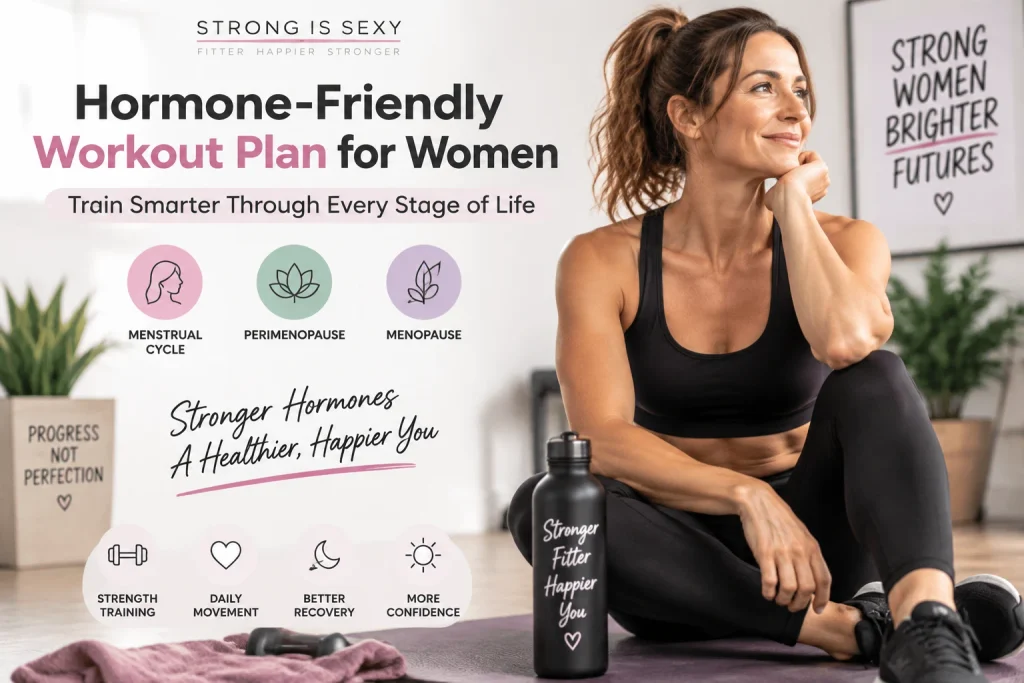
A hormone-friendly approach is not about avoiding challenging workouts or blaming hormones for every change. It is about understanding your body better and creating a training strategy that supports your strength, energy, recovery, and long-term health.
Whether you are experiencing changes during perimenopause, navigating menopause, or simply looking for a smarter way to train after 40, the right approach can help you feel stronger, healthier, and more confident. If you want a personalised plan designed around your goals and lifestyle, our online coaching programme provides expert guidance and support for women looking for sustainable results.
What Is a Hormone-Friendly Workout Plan?
A hormone-friendly workout plan is a training approach that considers how your body changes throughout different stages of life. Instead of following a generic programme where every workout is the same regardless of your energy levels, recovery, or lifestyle, this approach focuses on creating balance between training, movement, nutrition, and recovery. For many women, this means moving away from the idea that harder workouts always create better results.
Your body does not only respond to exercise. It responds to the combination of exercise, sleep, nutrition, stress, and recovery. A hormone-friendly workout plan focuses on building strength, maintaining muscle, supporting energy levels, improving confidence, and creating habits that can be maintained long-term. The goal is not simply to complete more workouts. The goal is to create a body that feels stronger and more capable.
Why Hormones Change the Way You Should Train
Hormones influence many areas of your health, including energy, recovery, muscle maintenance, sleep quality, and stress response. As your body moves through different stages of life, your training needs may also change. This does not mean you cannot continue making progress. It simply means your approach needs to become more personalised. A workout routine that worked perfectly when you were younger may not always be the best option later in life. Instead of forcing your body to follow an outdated routine, it is often more effective to understand what your body needs now.
Training During Different Stages of Life
For women who still experience regular cycles, hormonal fluctuations can influence energy levels, motivation, strength, and recovery. Some women feel stronger and more energised during certain parts of their cycle, while others may experience periods where they need more recovery and lower-intensity movement. A hormone-friendly approach does not mean following strict rules around your cycle. It means paying attention to your body and adjusting your training when necessary. Some days may be ideal for challenging strength sessions, while other days may be better suited for walking, mobility work, or lighter training. The goal is to create consistency without ignoring your body’s signals.
Training During Perimenopause
Perimenopause is the transitional stage before menopause, and it is often when many women begin noticing unexpected changes. You may experience changes in energy, sleep, recovery, exercise performance, and body composition.
Many women feel frustrated because the routines that worked before suddenly feel less effective. However, this does not mean you need to stop exercising. It means your strategy may need to evolve. During perimenopause, strength training, recovery, and sustainable nutrition become increasingly important because they support your ability to maintain muscle, stay active, and feel confident in your body.
If you want to understand how exercise can be adapted during this stage, our guide to fitness for women in perimenopause provides more information.
Training During Menopause
Menopause brings another important stage of change, especially as hormone levels shift and many women notice differences in recovery, muscle maintenance, energy, and body composition. This is why strength training becomes an important part of a long-term fitness approach. The goal is not to punish your body with excessive exercise. The goal is to support it. A balanced programme that combines resistance training, movement, recovery, and good nutrition can help women feel stronger and more capable during this stage of life.
The Core Principles of a Hormone-Friendly Workout Plan
One of the most valuable changes many women can make after 35 is focusing more on strength training. Many women spend years relying mainly on cardio because they believe it is the best way to manage weight and stay fit. While cardio is beneficial, strength training plays an important role in maintaining muscle, supporting metabolism, improving body composition, and building confidence. A hormone-friendly workout plan does not require you to lift extremely heavy weights. It means using resistance training consistently and gradually improving your strength over time.
A structured strength programme can include movements that develop your lower body, upper body, and core while improving overall movement quality. If you are new to strength training or returning after a break, our guide on how to build muscle after 40 explains how women can approach muscle building in a sustainable way.
Avoid Relying Only on High-Intensity Workouts
When progress slows down, many women immediately increase the amount of exercise they are doing. However, more exercise does not always mean better results. High-intensity workouts can be useful, but constantly pushing your body without enough recovery can leave you feeling exhausted and make consistency more difficult. A smarter approach is learning when to challenge yourself and when to allow your body to recover. Your training should support your lifestyle, not become another source of stress.
Daily Movement Matters
Walking is one of the simplest and most effective forms of movement. It supports overall health, improves daily activity levels, and allows you to stay active without placing excessive stress on your body. For many women, combining regular walking with strength training creates a balanced routine that is easier to maintain. Fitness does not always need to be complicated. Consistency with simple habits often creates the biggest long-term changes.
Recovery Is Part of Progress
Many women believe progress comes from constantly pushing harder. However, your body becomes stronger when it has time to recover and adapt. Without enough recovery, you may experience lower energy, reduced motivation, poor sleep, and slower progress. A hormone-friendly workout plan includes proper recovery through quality sleep, rest days, appropriate training volume, and listening to your body when adjustments are needed. Recovery is not a sign that you are doing less. It is part of becoming stronger.
Listen to Your Body and Adjust Your Training
A personalised approach understands that every day will not feel the same. Some days you may feel strong and ready for a challenging workout. Other days you may experience stress, poor sleep, or lower energy. The goal is not to avoid difficult sessions. The goal is to understand when your body needs support. Making small adjustments allows you to stay consistent instead of constantly stopping and restarting.
Nutrition and Lifestyle Support for Hormone-Friendly Training
Exercise works best when combined with supportive lifestyle habits. As women move through midlife, protein intake becomes especially important because it supports muscle maintenance and recovery from strength training. Our guide on protein intake for menopause explains why protein becomes such an important part of a menopause-friendly nutrition approach. A balanced lifestyle also includes eating enough nutritious food, staying hydrated, supporting sleep, and avoiding extreme dieting approaches. The goal is not perfection. The goal is creating habits that support your body consistently. If nutrition is the missing piece in your progress, our nutrition coaching focuses on sustainable strategies rather than restrictive diets.
Common Mistakes Women Make With Hormone-Related Training
One common mistake is increasing cardio whenever progress slows down. Often, the better solution is improving strength training, recovery, nutrition, and consistency. Another mistake is avoiding weights because of fear of becoming bulky. For most women, strength training creates a stronger and healthier body while supporting confidence and physical capability. Many women also underestimate the importance of recovery. Training harder every day without allowing your body time to adapt can eventually slow progress. It is also important to stop comparing your current body to your younger self. Your body has changed, and your training approach should change with it.
When Personalised Coaching Can Help
Every woman experiences hormonal changes differently. Your ideal training approach depends on your goals, lifestyle, training history, energy levels, and recovery ability. This is why personalised coaching can be valuable.
Instead of guessing which workouts, nutrition strategies, or routines will work best, you can follow a structured plan designed around your individual needs. Our menopause support programme combines personalised training, nutrition guidance, and ongoing support for women navigating hormonal changes. You can also explore our free guide to learn more about creating sustainable fitness habits.
Frequently Asked Questions
How many days a week should women train during perimenopause or menopause?
Most women benefit from two to four strength training sessions per week depending on their experience, goals, and recovery ability. The most important factor is consistency. A realistic programme that you can maintain will always be more effective than an extreme routine that you cannot sustain.
Is cardio bad for hormones?
No. Cardio provides many health benefits. The concern is excessive high-intensity training without enough recovery. A balanced fitness approach usually combines strength training, walking, and appropriate cardiovascular exercise.
Can exercise help during menopause?
Exercise can support strength, confidence, mood, energy levels, and overall health. However, every woman’s experience is different, and training should be adapted according to individual needs.
Do I need special equipment for a hormone-friendly workout plan?
No. A good programme can be created using bodyweight exercises, resistance bands, dumbbells, or gym equipment. The most important factors are consistency, progression, and choosing exercises suitable for your ability.
Start Building a Stronger Relationship With Your Body
Your body changes throughout life, and your approach to fitness should be able to change with it. A hormone-friendly workout plan is not about following strict rules or pushing yourself harder every day. It is about understanding what your body needs, creating a balanced routine, and choosing training strategies that support your strength, energy, and confidence. Whether you are experiencing changes during perimenopause, navigating menopause, or simply looking for a smarter way to train after 40, the right approach can help you feel stronger and more in control. With personalised guidance, your workouts, nutrition, and lifestyle habits can work together instead of feeling like separate challenges. At Strong Is Sexy, our coaching approach helps women create sustainable routines built around their individual goals, lifestyle, and stage of life.
If you are ready to move away from confusing fitness advice and start following a plan designed around your body, explore our online coaching programme and take the next step towards becoming stronger, healthier, and more confident.