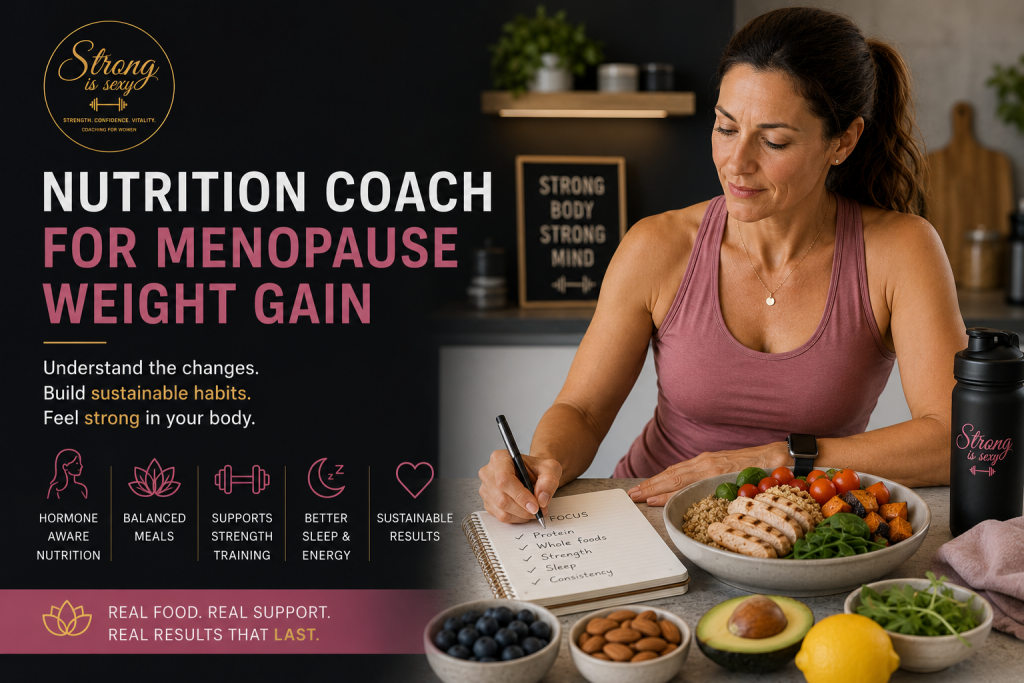
If you’ve gained weight during menopause despite eating the same way you always have, you’re not imagining it, and you haven’t failed. Menopause weight gain is one of the most common and most misunderstood symptoms of this life stage, and it’s exactly why working with a nutrition coach for menopause weight gain has become such a valuable, targeted solution for so many women.
This guide explains precisely why menopause causes weight gain, why generic diets consistently fail to address it, and what a specialised nutrition coach actually does differently to help you see real, lasting results.
Why Menopause Causes Weight Gain: The Real Mechanisms
Menopause-related weight gain isn’t simply about eating more or moving less; it’s driven by specific physiological changes that most generic diet advice completely ignores.
1. Declining Oestrogen Changes Fat Storage Patterns
As oestrogen levels drop, fat storage shifts from the hips and thighs toward the abdomen. This isn’t just cosmetic; visceral fat around the midsection is more metabolically active and harder to lose through diet alone.
2. Muscle Loss Slows Your Metabolism
Women naturally lose muscle mass with age, a process that accelerates during menopause. Since muscle burns more energy at rest than fat, this decline directly reduces your daily calorie needs, meaning the same eating habits that once maintained your weight can now lead to gradual gain.
3. Insulin Sensitivity Decreases
Menopause is associated with reduced insulin sensitivity, meaning your body becomes less efficient at processing carbohydrates. This can lead to increased fat storage, particularly around the abdomen, even without changes in overall calorie intake.
4. Cortisol and Stress Compound the Problem
Menopause often coincides with increased life stress, caregiving responsibilities, career pressures, and sleep disruption, all of which raise cortisol levels. Elevated cortisol is directly linked to increased abdominal fat storage and stronger cravings for high-sugar, high-fat foods.
5. Sleep Disruption Affects Appetite Hormones
Night sweats and hormonal fluctuations often disrupt sleep during menopause, which in turn disrupts leptin and ghrelin, the hormones that regulate hunger and fullness. Poor sleep is consistently linked to increased calorie intake and cravings the following day.
Why Generic Diets Fail for Menopause Weight Gain
Most mainstream diet advice is built around simple calorie restriction: “Eat less, move more.” For menopause weight gain specifically, this approach often backfires, because it:
- Doesn’t address the underlying muscle loss driving metabolic slowdown
- Can worsen cortisol levels through excessive restriction, adding more stress to an already sensitive system
- Fails to account for changing insulin sensitivity and how carbohydrates should be structured
- Ignores the role of strength training in preserving metabolic rate
- Often leads to short-term results that reverse once the diet ends
This is precisely why women who’ve tried “everything” often still struggle; the advice itself wasn’t built for what’s actually happening in their bodies.
What a Nutrition Coach for Menopause Weight Gain Actually Does
1. Identifies What’s Really Driving Your Weight Gain
Rather than assuming it’s simply about calories, a specialised coach considers your muscle mass, activity levels, stress, sleep, and eating patterns together to understand the actual drivers behind your specific weight gain.
2. Prioritises Protein and Strength-Supporting Nutrition
Since muscle loss directly impacts metabolism, nutrition coaching for menopause weight gain typically emphasises higher protein intake (roughly 1.6–2.2g per kg of bodyweight daily) to support muscle preservation and repair, particularly when combined with strength training.
3. Structures Carbohydrates Around Insulin Sensitivity
Rather than eliminating carbohydrates entirely, a good coach helps you structure them strategically, pairing carbs with protein and fibre, and timing them around activity to support better blood sugar control without unnecessary restriction.
4. Builds Sustainable Habits, Not Temporary Restriction
Effective coaching focuses on habits you can maintain long-term: consistent meal structure, adequate protein, mindful portion awareness, and flexibility for real life rather than a rigid short-term plan destined to fail.
5. Integrates Nutrition With Strength Training
Since muscle preservation is central to reversing menopause-related metabolic slowdown, nutrition coaching works best when paired with progressive strength training. Our guide on strength training for women over 40 in the UK explains exactly how this combination supports long-term weight management.
6. Addresses Stress and Sleep, Not Just Food
Because cortisol and sleep disruption directly influence weight gain, a thorough coaching approach also addresses lifestyle factors, not just what’s on your plate, recognising that nutrition alone can’t fully offset chronically poor sleep or unmanaged stress.
Managing Cravings During Menopause Weight Gain
Increased cravings are one of the most frustrating parts of menopause weight gain, but they’re a physiological response, not a willpower failure. A nutrition coach typically helps by:
- Structuring balanced meals that stabilise blood sugar and reduce crash-driven cravings
- Identifying genuine hunger versus emotional or habitual eating patterns
- Building in planned, satisfying snacks rather than relying on restriction, which often backfires into cravings later
For a deeper, practical breakdown of managing hunger and cravings specifically during menopause, see our guide on smart snacking and hunger awareness during menopause.
What Results Can You Realistically Expect?
With consistent nutrition coaching and, ideally, paired strength training, most women notice:
- Within 2–3 weeks: reduced cravings and more stable energy throughout the day
- Within 4–6 weeks: improved digestion, less bloating, and better sleep quality
- Within 8–12 weeks: noticeable changes in body composition, even if the scale moves slowly
- Long-term: sustainable weight management and improved metabolic health through menopause and beyond
It’s worth noting: because muscle is denser than fat, the scale isn’t always the most accurate progress marker during this process. Measurements, photos, and how clothes fit often tell a more complete story.
How to Choose the Right Nutrition Coach for Menopause Weight Gain
When evaluating your options, look for:
- Specific experience with menopause-related weight changes, not just general weight loss coaching
- A focus on sustainable habits, rather than restrictive short-term dieting
- Integration with strength training, since nutrition alone rarely resolves the muscle-loss component of menopause weight gain
- Understanding of stress and sleep’s role, not just food intake
- Realistic expectations and communication, rather than promises of rapid, dramatic results
If you’re also considering flexible coaching options, our guide on online menopause fitness coaching in the UK explains how combined nutrition and training support can be delivered remotely, with the same level of personalisation as in-person coaching.
Frequently Asked Questions
Why do I keep gaining weight during menopause even though I haven’t changed my diet?
Menopause causes declining oestrogen, muscle loss, and reduced insulin sensitivity, all of which lower your body’s calorie needs and shift fat storage toward the abdomen, meaning the same eating habits that once maintained your weight can now lead to gradual gain.
Can a nutrition coach really help with menopause weight gain, or is it mostly hormonal?
Yes. While hormones are a major driver, nutrition coaching addresses the modifiable factors, such as protein intake, blood sugar management, and sustainable habits that directly influence how your body responds to these hormonal changes.
Do I need to combine nutrition coaching with exercise to see results?
While nutrition coaching alone can help, combining it with strength training significantly improves results by directly addressing the muscle loss that drives menopause-related metabolic slowdown.
How long does it take to see results from nutrition coaching for menopause weight gain?
Many women notice reduced cravings and improved energy within a few weeks, while more significant changes in body composition typically develop over 8–12 weeks of consistent, sustainable habits.
Is restrictive dieting effective for menopause weight gain?
No. Restrictive dieting can increase cortisol and worsen hormonal stress, often leading to short-term results that reverse. Sustainable, protein-focused nutrition paired with strength training tends to be far more effective long-term.
Understand Your Body, Then Work With It
Menopause weight gain isn’t a personal failing it’s a physiological shift that requires a different, more targeted approach than generic dieting. A specialised nutrition coach for menopause weight gain helps you understand exactly what’s happening in your body and builds a sustainable plan around it.
At Strong is Sexy, we help women navigate menopause-related weight changes through personalised nutrition coaching, integrated with strength training, designed for real, lasting results.
Ready to get started? Book your free consultation and let’s build a nutrition approach that finally makes sense for your body.