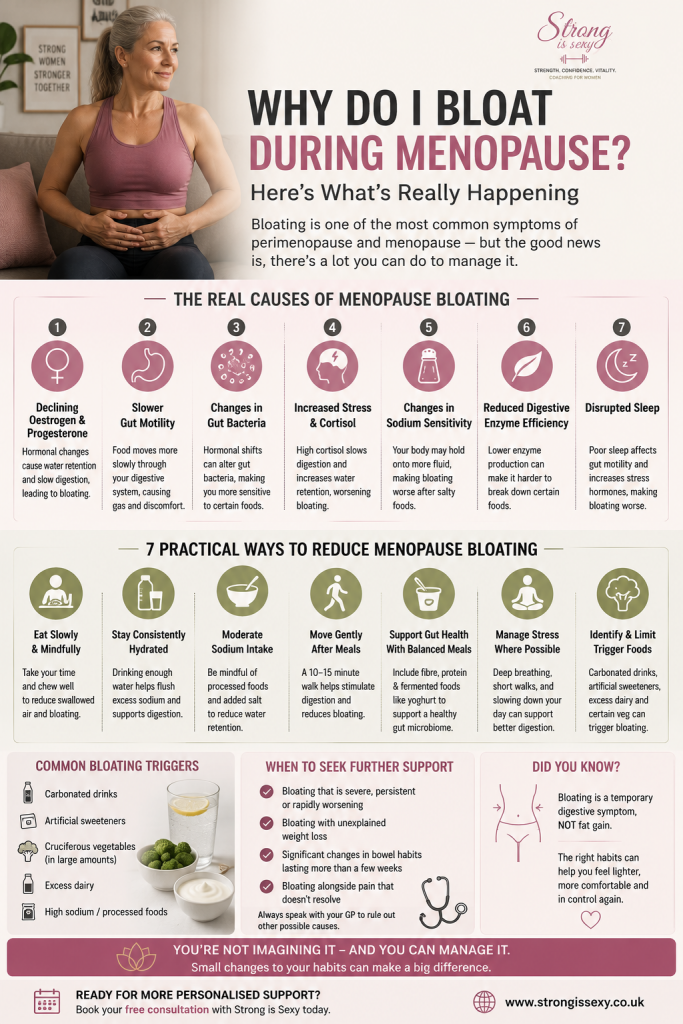

If your stomach feels distended, tight, or uncomfortable more often than it used to, even after eating meals that never bothered you before, you’re likely asking yourself: ” Why do I bloat during menopause? The honest answer is that menopause bloating is extremely common, driven by identifiable hormonal and lifestyle changes, and there’s a lot you can do to manage it once you understand what’s actually happening.
This guide breaks down the real causes of menopause bloating and gives you practical, realistic strategies to feel more comfortable.
Is Menopause Bloating Actually Normal?
Yes. Bloating is one of the most commonly reported digestive symptoms during perimenopause and menopause, alongside hot flushes and sleep disruption. Studies and clinical reports consistently show that gastrointestinal symptoms, including bloating, become more frequent as women move through this hormonal transition, so if you’re experiencing it, you’re far from alone, and it’s not something to feel embarrassed about.
The Real Causes of Menopause Bloating
1. Declining Oestrogen and Progesterone
Oestrogen and progesterone both play a role in regulating water retention and gut motility. As these hormones fluctuate and decline during perimenopause and menopause, digestion can slow down, and the body may hold onto more fluid, both of which contribute directly to that bloated, tight feeling.
2. Slower Gut Motility
Hormonal changes can reduce the speed at which food moves through your digestive system. When digestion slows, gas and waste sit in the intestines longer, increasing bloating, discomfort, and general sluggishness.
3. Changes in Gut Bacteria
Emerging research suggests that hormonal shifts during menopause can influence the balance of gut bacteria, which plays a significant role in digestion and gas production. An altered gut microbiome can make you more sensitive to foods that never used to cause problems.
4. Increased Stress and Cortisol
Menopause often coincides with a demanding stage of life, career pressures, family responsibilities, and disrupted sleep, all of which raise cortisol levels. Elevated cortisol slows digestion and increases water retention, compounding bloating symptoms.
5. Changes in Sodium Sensitivity
Hormonal shifts can make the body more sensitive to sodium, meaning meals that once caused minimal water retention may now lead to noticeably more bloating and puffiness.
6. Reduced Digestive Enzyme Efficiency
As we age, digestive enzyme production can naturally decline, making it harder to break down certain foods efficiently, particularly fibrous vegetables, legumes, and dairy, which can increase gas and bloating.
7. Disrupted Sleep Worsening Digestion
Night sweats and hormonal fluctuations frequently disrupt sleep during menopause. Poor sleep negatively affects gut motility and increases stress hormones, creating a cycle that worsens bloating over time.
Practical Ways to Reduce Menopause Bloating
1. Eat Slowly and Mindfully
Eating quickly increases the amount of air swallowed during meals, which contributes directly to bloating. Slowing down and chewing thoroughly can make a noticeable difference.
2. Stay Consistently Hydrated
It may seem counterintuitive, but adequate water intake actually helps reduce bloating by supporting healthy digestion and reducing the body’s tendency to retain fluid defensively.
3. Moderate Sodium Intake
Since sodium sensitivity often increases during menopause, being mindful of processed foods, takeaways, and added salt can meaningfully reduce water retention and bloating.
4. Prioritise Gentle Movement After Meals
A short 10–15 minute walk after eating helps stimulate digestion and can noticeably reduce post-meal bloating and discomfort.
5. Support Gut Health With Balanced Meals
Including a mix of fibre, protein, and fermented foods (like natural yoghurt) can support a healthier gut microbiome, which may help reduce bloating over time. For more detailed, practical strategies on structuring meals during menopause, particularly around managing hunger and cravings alongside digestion, our guide on smart snacking and hunger awareness during menopause covers this in depth.
6. Manage Stress Where Possible
Since cortisol directly impacts digestion, incorporating stress-reducing habits, such as deep breathing before meals, short walks, or simply slowing down your day where possible, can meaningfully support gut function.
7. Consider Reducing Common Trigger Foods Temporarily
Carbonated drinks, artificial sweeteners, cruciferous vegetables (in large amounts), and excess dairy are common bloating triggers. Temporarily reducing these and reintroducing them one at a time can help you identify your personal triggers.
When Menopause Bloating Overlaps With Other Digestive Sensitivities
Menopause-related bloating often overlaps with broader digestive sensitivity, particularly around holidays, travel, or periods of higher stress and richer eating. If you’ve noticed your digestion feels particularly disrupted during specific times of year, our related guide on digestive issues during the festive season explores how seasonal eating patterns, alcohol, and stress compound digestive symptoms; many of the same principles apply directly to managing menopause bloating year-round.
When to Seek Further Support
While occasional bloating is a normal part of the menopause transition, it’s worth speaking with a GP if you experience:
- Bloating that is severe, persistent, or rapidly worsening
- Bloating accompanied by unexplained weight loss
- Significant changes in bowel habits lasting more than a few weeks
- Bloating alongside pain that doesn’t resolve
These symptoms don’t necessarily indicate anything serious, but it’s always worth ruling out other causes with a healthcare professional, particularly if symptoms feel unusual or severe for you.
Frequently Asked Questions
Why does menopause bloating seem to get worse some days and not others?
Bloating often fluctuates alongside hormone levels, stress, sleep quality, and food intake, meaning it’s normal for symptoms to vary considerably day to day rather than remaining constant.
Does menopause bloating ever go away completely?
For many women, bloating improves once hormone levels stabilise in postmenopause, though ongoing lifestyle factors like stress, sodium intake, and gut health continue to play a role in symptom severity.
Can exercise help reduce menopause bloating?
Yes. Regular movement, particularly gentle walking after meals, supports healthy digestion and can meaningfully reduce bloating, alongside broader benefits like improved mood and energy.
Are there specific foods that help reduce menopause bloating?
Foods rich in fibre, natural probiotics (like plain yoghurt), and adequate hydration generally support gut health, while reducing processed foods, excess sodium, and carbonated drinks can help minimise bloating triggers.
Is menopause bloating linked to weight gain?
Bloating itself is a temporary digestive symptom rather than fat gain, though both bloating and genuine weight changes are common during menopause and can sometimes feel connected due to overlapping hormonal causes.
You’re Not Imagining It, And You Can Manage It
Menopause bloating is real, common, and driven by identifiable hormonal and lifestyle factors, not a mystery, and not something you simply have to accept indefinitely. With the right adjustments to eating pace, hydration, movement, and stress management, most women find meaningful relief.
If digestive discomfort, bloating, or broader menopause symptoms are affecting your daily life, personalised support can make a significant difference. Explore how online menopause fitness coaching combines training and nutrition guidance to help you feel more in control of your body during this transition.
Ready for more personalised support? Book your free consultation with Strong is Sexy today.