
If your body suddenly seems to be changing shape despite eating and training the same way you always have, you’re not losing your mind; you may be experiencing perimenopause weight gain. This transitional stage, which can begin as early as your late 30s and last several years, brings hormonal shifts that affect not just your period, but your metabolism, appetite, and where your body chooses to store fat.
Many women don’t realise they’re in perimenopause until they start noticing physical changes that don’t match up with their lifestyle. Understanding the signs early makes it far easier to respond with the right strategy, rather than blaming yourself for something that’s largely driven by hormones.
What Is Perimenopause Weight Gain?
Perimenopause is the transitional period leading up to menopause, marked by fluctuating and gradually declining oestrogen and progesterone. These hormonal shifts don’t just affect your cycle — they influence insulin sensitivity, cortisol regulation, fat storage patterns, and even sleep quality, all of which play a role in weight.
Perimenopause weight gain isn’t simply about eating more or moving less. Many women going through this transition find the scale creeping up even when their habits haven’t changed at all, which is exactly why understanding the underlying signs and causes matters so much.
Common Signs of Perimenopause Weight Gain
Weight changes during perimenopause tend to show up in fairly recognisable patterns. Here are the signs most women notice first.
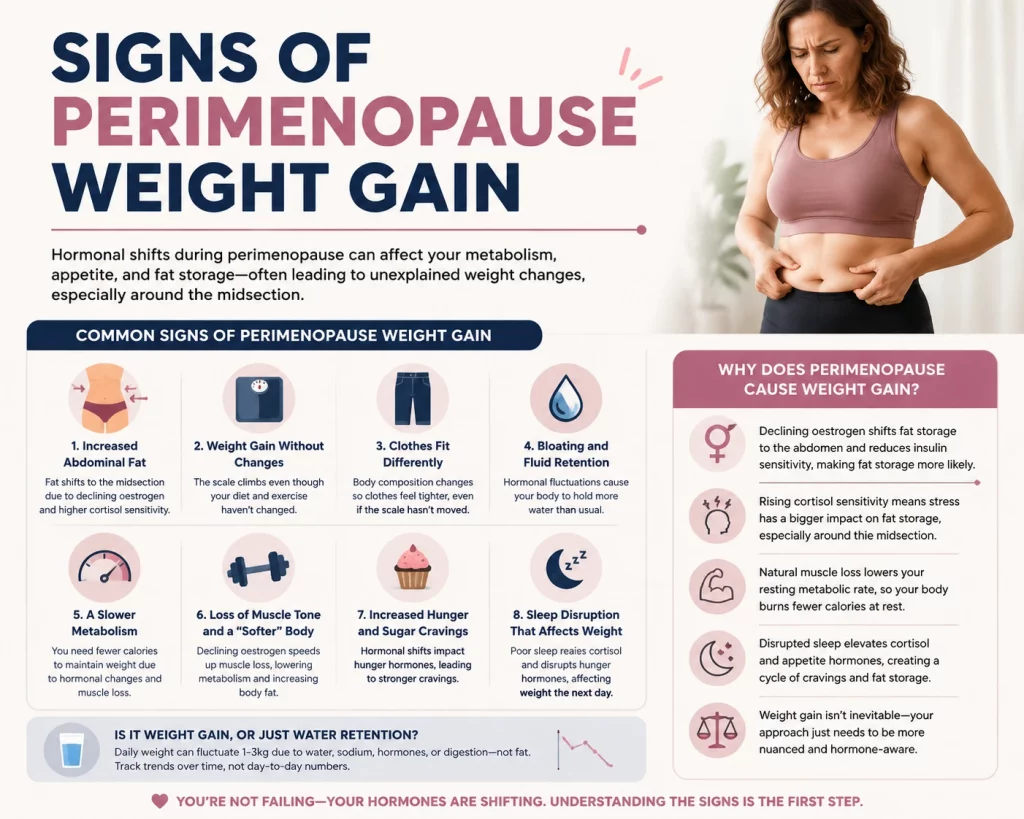
Increased Abdominal Fat
One of the clearest signs of perimenopause weight gain is a shift in fat distribution toward the midsection. Even women who have never carried weight around their stomach often notice new fat accumulating there specifically, a pattern closely linked to declining oestrogen and rising cortisol sensitivity.
Weight Gain Without Changes to Diet or Exercise
If the number on the scale is climbing despite no real changes to your eating or training routine, hormonal shifts are a likely culprit. Reduced oestrogen affects how efficiently your body uses insulin, which can lead to more fat storage even at a consistent calorie intake.
Clothes Fitting Differently, Even When the Scale Hasn’t Moved
Perimenopause often changes body composition, meaning your fat-to-muscle ratio shifts before the number on the scale does. You might notice your waistband feels tighter or your usual clothes sit differently, even if your weight looks unchanged. This is a strong sign that fat distribution is shifting, independent of total body weight.
Bloating and Fluid Retention
Hormonal fluctuations, particularly in oestrogen and progesterone, can cause the body to hold onto more water than usual. This often shows up as puffiness, bloating, or a “heavier” feeling that isn’t necessarily related to fat gain.
A Noticeably Slower Metabolism
Many women in perimenopause report needing fewer calories than they used to to maintain their weight. This is partly due to natural age-related muscle loss and partly due to hormonal changes that reduce metabolic rate, meaning old calorie targets may no longer apply.
Loss of Muscle Tone and a “Softer” Body Composition
Declining oestrogen accelerates the natural loss of muscle mass that occurs with age, a process called sarcopenia. Less muscle means a lower resting metabolic rate, softer overall body composition, and, often, an increase in visible body fat even without significant weight change.
Increased Hunger and Sugar Cravings
Hormonal shifts affect appetite-regulating hormones like leptin and ghrelin, often resulting in stronger hunger cues and more frequent cravings for refined carbohydrates and sugar. Left unmanaged, this can contribute meaningfully to gradual weight gain over time.
Sleep Disruption That Affects Weight
Night sweats, insomnia, and general sleep disruption are extremely common during perimenopause, and poor sleep directly raises cortisol and disrupts hunger hormones the following day. Many women don’t connect their sleep struggles to their weight changes, but the two are closely linked.
Why Does Perimenopause Cause Weight Gain?
Understanding the “why” behind these signs can make them feel far less overwhelming.
Declining oestrogen affects fat distribution, shifting storage from the hips and thighs toward the abdomen, and reduces insulin sensitivity, making fat storage more likely.
Rising cortisol sensitivity means everyday stress has a stronger impact on fat storage, particularly around the midsection, than it did in earlier years.
Natural muscle loss lowers resting metabolic rate, meaning your body burns fewer calories at rest than it used to, even without any change in activity levels.
Disrupted sleep elevates cortisol and appetite hormones, creating a cycle where poor rest fuels cravings and fat storage the next day.
None of this means weight gain during perimenopause is inevitable or unmanageable — it simply means the old rules of “eat less, move more” often need a more nuanced, hormone-aware approach to actually work.
Is It Weight Gain, or Just Water Retention?
Before assuming every uptick on the scale represents fat gain, it’s worth understanding how much day-to-day weight fluctuation is simply water, sodium, hormones, or digestion — not fat at all. This is particularly relevant during perimenopause, when hormonal fluctuations can cause more dramatic swings in water retention than you may be used to.
If you’ve noticed your weight bouncing around and want to understand what’s actually happening beneath the numbers, our post on why the scale fluctuates breaks down exactly what causes those day-to-day changes, and how to tell the difference between normal fluctuation and a genuine upward trend.
How to Manage Perimenopause Weight Gain
While you can’t stop hormonal change, you can absolutely work with it. Here’s what tends to make the biggest difference.
Prioritise Strength Training
Resistance training is one of the most effective tools for counteracting perimenopause weight gain. Building and maintaining muscle mass helps offset the natural metabolic slowdown, improves insulin sensitivity, and directly supports a leaner, stronger body composition even if the number on the scale doesn’t move dramatically.
Rethink Your Approach to Nutrition
Rather than cutting calories aggressively, focus on protein intake, fibre-rich carbohydrates, and healthy fats. Protein in particular supports muscle retention and helps manage the increased hunger many women experience during this stage. Extreme restriction tends to backfire, often increasing cortisol and worsening the very symptoms you’re trying to manage.
Protect Your Sleep
Since poor sleep directly worsens hunger hormones and cortisol, improving sleep quality is one of the highest-leverage changes you can make. Consistent bedtimes, reduced screen time in the evening, and managing night sweats where possible can all help.
Manage Stress Proactively
Because cortisol plays such a significant role in perimenopausal fat storage, particularly around the midsection, incorporating stress-reduction practices, whether that’s walking, breathing exercises, or simply protecting downtime, can meaningfully support your results.
Track Trends, Not Daily Numbers
Given how much water retention can affect day-to-day scale readings during perimenopause, it’s far more useful to track weekly or monthly averages, progress photos, and how your clothes fit, rather than reacting to any single day’s number.
Reassess Your Alcohol Intake
Alcohol affects hormone metabolism, disrupts sleep quality, and is often overlooked as a contributor to perimenopause weight gain. It can also lower inhibitions around food choices later in the evening. Reducing intake, even modestly, is one of the simplest changes many women find makes a noticeable difference to both energy and body composition.
Don’t Underestimate Daily Movement
Beyond structured training sessions, overall daily movement walking, taking the stairs, standing more throughout the day plays a meaningful role in managing perimenopause weight gain. Non-exercise activity often declines gradually with age and busier lifestyles, quietly reducing daily calorie expenditure without anyone noticing. Rebuilding this habit, even through small changes like a daily walk, can meaningfully support your results alongside strength training.
Common Mistakes That Make Perimenopause Weight Gain Worse
Many well-intentioned strategies can actually work against you during this stage of life. Being aware of these common pitfalls can save you months of frustration.
Cutting Calories Too Aggressively
Severe calorie restriction tends to raise cortisol, disrupt sleep, and accelerate muscle loss, all of which work directly against your goals during perimenopause. A more moderate, sustainable approach almost always outperforms drastic restriction over the long term.
Relying Solely on Cardio
While cardiovascular exercise has genuine health benefits, relying on it exclusively without strength training does little to counteract the muscle loss driving much of perimenopause weight gain. Many women who increase cardio without adding resistance training find their results plateau or their body composition doesn’t change as expected.
Ignoring Protein Intake
Protein needs typically increase during perimenopause to help offset muscle loss and support satiety. Many women unintentionally under-eat protein, particularly if they’ve followed lower-protein diets in the past, which can make both cravings and muscle retention harder to manage.
Comparing Your Body to Your 30s Self
It’s natural to compare your current body to how it responded to diet and exercise a decade earlier, but perimenopause genuinely changes the rules. Holding onto outdated expectations often leads to frustration and inconsistency, rather than the patience this transition actually requires.
Skipping Sleep and Stress as Priorities
It’s easy to treat sleep and stress management as secondary to diet and exercise, but during perimenopause, they’re often just as influential on weight, sometimes more so. Overlooking them can undermine even a well-structured training and nutrition plan.
When to See a Doctor
While many symptoms of perimenopause weight gain are a normal part of this life stage, it’s worth speaking to a doctor if you experience:
Rapid, unexplained weight gain over a short period
Weight gain accompanied by severe fatigue, hair loss, or mood changes
Symptoms significantly disrupting your daily life or wellbeing
Uncertainty about whether your symptoms are related to perimenopause or another underlying condition
A healthcare provider can help rule out other causes and discuss options, including hormone therapy, if appropriate for your situation.
Frequently Asked Questions
At what age does perimenopause weight gain usually start?
Perimenopause can begin as early as the late 30s, though most women notice symptoms, including weight changes, in their 40s. The timeline varies significantly from person to person.
Can perimenopause weight gain be reversed?
Yes, to a significant degree. While hormonal shifts are a factor, strength training, adequate protein intake, better sleep, and stress management can meaningfully improve body composition and counteract much of the weight gain associated with this stage.
Why is perimenopause weight gain concentrated around the belly?
Declining oestrogen shifts fat storage patterns away from the hips and thighs and toward the abdomen, which is why many women notice new midsection fat specifically during this transition.
Is it normal for the scale to fluctuate a lot during perimenopause?
Yes. Hormonal changes can increase water retention and day-to-day fluctuations significantly, which is why tracking trends over time is far more useful than focusing on any single day’s reading.
How Long Does Perimenopause Weight Gain Last?
Perimenopause itself can last anywhere from a few years to closer to a decade, and the pace of weight-related changes varies significantly from woman to woman. For some, changes appear gradually over several years; for others, they seem to happen suddenly over a matter of months. What matters most isn’t the exact timeline, but recognising that this is a distinct physiological stage, not a personal failing, and adjusting your approach accordingly rather than waiting for symptoms to resolve on their own.
In this survey
Recognising the signs of perimenopause weight gain is the first step toward addressing it with the right strategy rather than frustration or guesswork. Hormonal shifts undeniably make this stage more challenging, but with a focus on strength training, protein-rich nutrition, sleep, and stress management, meaningful and sustainable change is absolutely achievable.
If you’d like a personalised plan built around exactly what your body is going through, book a free discovery call and let’s talk about your goals.