If you’ve noticed your body changing shape, your strength dropping, or the number on the scale creeping up despite eating “the same as always,” you are not imagining it. One of the most overlooked and most powerful tools for managing menopause symptoms is something you already eat every day: protein.
Getting your protein intake right during menopause can be the difference between feeling strong, energised, and in control of your body, or feeling like you’re constantly fighting against it. In this guide, we’ll break down exactly how much protein menopausal and perimenopausal women in the UK need, why the requirement changes during this life stage, the best food sources, and a simple plan you can start using today.
Why Protein Needs Change During Menopause
During perimenopause and menopause, oestrogen levels decline significantly. Oestrogen doesn’t just regulate your cycle; it also plays a direct role in muscle protein synthesis, bone density and metabolic rate. As oestrogen drops:
- Muscle mass declines faster: women can lose 3–8% per decade after 30, and this rate accelerates sharply during menopause.
- Bone density decreases, raising the risk of osteopenia and osteoporosis.
- Metabolism slows, partly because muscle tissue burns more calories at rest than fat tissue.
- Insulin sensitivity worsens, making fat storage (especially around the midsection) more likely.
- Recovery from exercise and daily fatigue takes longer.
This combination is often called menopausal sarcopenia, the accelerated loss of muscle mass and strength linked to hormonal decline. The good news is that increasing your protein intake, especially when paired with resistance training, can significantly slow or even reverse this process.
How Much Protein Do You Need During Menopause?
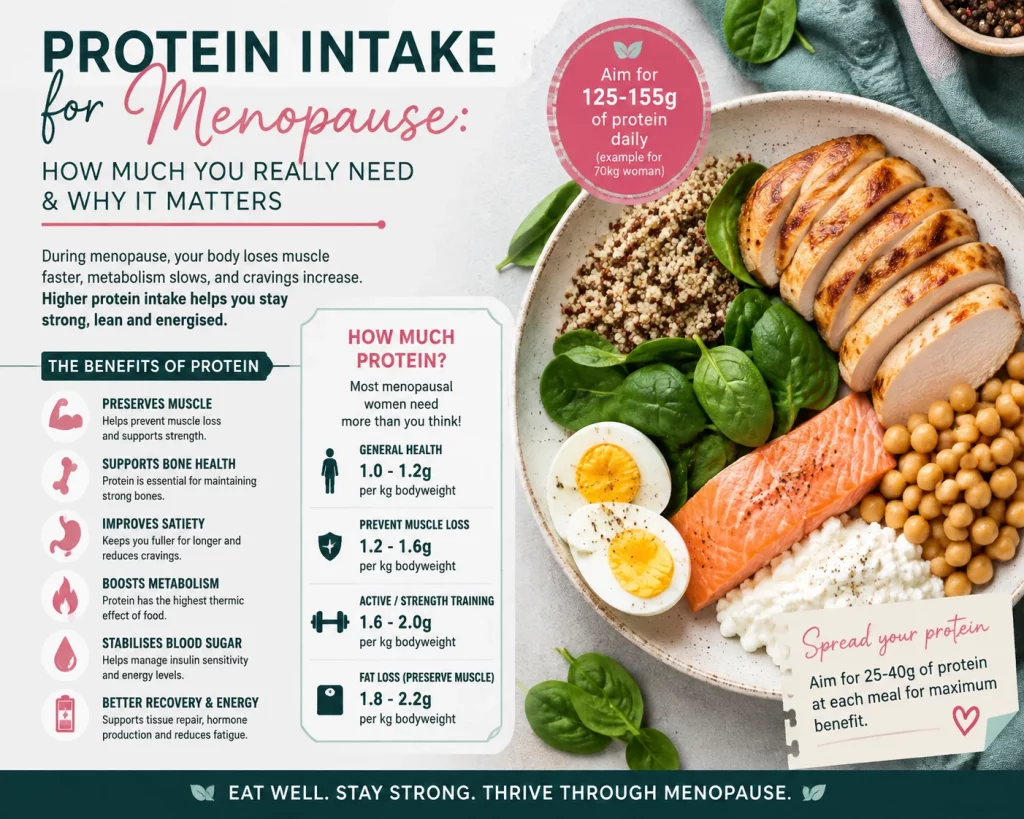
Standard UK dietary guidance (0.75g per kg of bodyweight) was designed decades ago for general population health, not for women navigating hormonal muscle loss. Most menopause and sports nutrition research now points to a much higher target.
| Goal | Recommended Protein Intake |
| General health maintenance | 1.0–1.2g per kg bodyweight |
| Preventing muscle loss (sarcopenia prevention) | 1.2–1.6g per kg bodyweight |
| Active women/strength training | 1.6–2.0g per kg bodyweight |
| Fat loss while preserving muscle | 1.8–2.2g per kg bodyweight |
Example: A woman weighing 70kg aiming to preserve muscle and support fat loss during menopause would benefit from roughly 125–155g of protein per day, spread across her meals.
This is considerably higher than most women currently eat. Many women in perimenopause and menopause are consuming under 60–70g per day without realising the gap, which is one of the biggest hidden reasons for stalled progress, no matter how “clean” the rest of the diet looks.
If you want a completely personalised number based on your body, activity level and goals rather than a general calculation, this is exactly the kind of detail covered inside personalised nutrition coaching, where your protein target is built around your actual lifestyle rather than a generic chart.
The Benefits of Higher Protein Intake in Menopause
1. Preserves and Builds Lean Muscle
Combined with strength training, adequate protein signals your body to maintain and build muscle tissue rather than break it down critical when oestrogen is no longer supporting this process naturally.
2. Supports Bone Health
Protein makes up around 50% of bone volume. Alongside calcium and vitamin D, sufficient protein intake is associated with better bone mineral density and lower fracture risk in postmenopausal women.
3. Improves Satiety and Reduces Cravings
Protein is the most satiating macronutrient. Higher protein meals reduce hunger hormones (ghrelin) and increase fullness hormones (GLP-1, PYY), extremely useful when menopause-related appetite changes and sugar cravings hit hardest.
4. Supports a Healthy Metabolism
Protein has the highest thermic effect of food, meaning your body burns more calories digesting it compared to carbs or fat. Maintaining muscle mass through adequate protein also keeps your resting metabolic rate higher.
5. Stabilises Blood Sugar
Balanced protein intake at each meal slows glucose absorption, helping manage the insulin resistance that becomes more common during and after menopause.
6. Better Recovery, Less Fatigue
Many women describe menopause-related exhaustion that goes beyond poor sleep. Adequate protein supports tissue repair, hormone production, and steadier energy throughout the day.
Best Protein Sources for Menopausal Women
You don’t need extreme diets or expensive supplements to hit your protein target; you need consistency and variety.
Animal-based sources (complete proteins):
- Chicken breast, turkey
- Lean beef and pork
- Eggs (a fantastic budget-friendly option)
- Greek yoghurt and cottage cheese
- White fish, salmon, and other oily fish (also rich in omega-3s, helpful for joint and heart health during menopause)
Plant-based sources:
- Lentils, chickpeas, black beans
- Tofu and tempeh
- Edamame
- Quinoa
- Nuts and seeds (in moderation, calorie-dense)
Convenient options for busy days:
- Whey or plant-based protein powder
- Protein shakes or ready-to-drink options
- High-protein snack bars with minimal added sugar
If you’re often eating on the run between work, family, and everything else menopause throws at you, it’s worth reading this guide on eating on the go and staying on track with protein, which covers realistic strategies for hitting your target without meal prepping for hours.
How to Distribute Protein Across the Day
Research suggests that spreading protein evenly across 3–4 meals is more effective for muscle protein synthesis than loading it all into one meal (which is what most women unintentionally do at dinner).
A simple structure to aim for:
- Breakfast: 25–35g (e.g. Greek yoghurt with berries and a scoop of protein powder, or 3 eggs with wholegrain toast)
- Lunch: 30–40g (e.g. chicken or tofu salad with quinoa and mixed vegetables)
- Dinner: 30–40g (e.g. salmon or lean beef with vegetables and sweet potato)
- Snack(s): 15–25g (e.g. cottage cheese, a protein shake, or edamame)
Getting hungry between meals is extremely common during menopause due to hormonal fluctuations. Understanding real hunger versus habitual or emotional eating can make a huge difference here. This guide on smart snacking and hunger awareness during menopause explains how to tell the difference and snack strategically without derailing your progress.
Protein Alone Isn’t Enough: Pair It With Strength Training
Protein provides the raw material for muscle repair, but resistance training is the stimulus that tells your body to actually use it. Women who combine a higher protein intake with 2–4 strength sessions per week see significantly better outcomes for muscle retention, bone density, metabolic health, and fat loss than diet changes alone.
This is one of the core reasons hormone-aware online coaching for women over 35 blends structured strength programming with nutrition guidance rather than treating them as separate problems, because during menopause, they genuinely aren’t.
Why the Scale Might Not Move (Even When You’re Doing Everything Right)
One of the most frustrating parts of increasing protein and starting strength training during menopause is that the scale can stay the same or even go up slightly while your body is actually changing for the better. This is usually due to water retention from new training, muscle gain, hormonal fluctuation, or simply the natural weight of the day.
If this sounds familiar, it’s worth reading why the scale fluctuates before you judge your progress by the number alone. Measurements, photos, energy levels, and how your clothes fit are far more reliable indicators during menopause.
Common Protein Mistakes Menopausal Women Make
- Only eating protein at dinner – leaving breakfast and lunch almost protein-free.
- Underestimating portions – a “chicken breast” from a packet is often smaller than it looks.
- Relying on carb-heavy convenience food when short on time, rather than a quick protein source.
- Fearing red meat or dairy unnecessarily, when both can be valuable, nutrient-dense protein sources in moderation.
- Not adjusting intake upward as training increases, so the body has nothing extra to build with.
- Ignoring digestion – some women find higher protein intake initially affects digestion; introducing it gradually and staying hydrated usually resolves this.
Sample One-Day High-Protein Meal Plan (UK-Friendly)
- Breakfast: Scrambled eggs (3) with spinach and wholemeal toast – ~28g protein
- Mid-morning snack: Greek yoghurt with mixed berries – ~15g protein
- Lunch: Grilled chicken breast, mixed leaves, chickpeas and olive oil dressing – ~38g protein
- Afternoon snack: Protein shake or a handful of edamame – ~20g protein
- Dinner: Baked salmon, broccoli and new potatoes – ~35g protein
Total: approximately 136g protein – suitable for a woman around 70–75kg working on muscle preservation and fat loss.
Do You Need Protein Supplements During Menopause?
Whole food should always come first, but protein powder can be a genuinely useful tool, especially on busy days, post-workout, or if appetite is low. Whey protein isolate, casein, or plant-based blends (pea, soy, rice) are all suitable options. Look for products with minimal added sugar and third-party testing where possible, particularly if you’re also managing other menopause supplements or medication.
Protein, HRT and Menopause Symptoms in the UK
Many women across the UK are now combining Hormone Replacement Therapy (HRT) with lifestyle changes to manage menopause symptoms, and nutrition plays a supporting role alongside it, not a replacement for it. HRT can help regulate hormonal fluctuations, but protein intake still matters just as much for muscle, bone and metabolic health regardless of whether you’re on HRT, considering it, or managing menopause naturally.
Adequate protein has also been linked to better sleep quality, more stable mood, and reduced intensity of hot flushes in some studies, largely through its effect on blood sugar stability and steadier energy release throughout the day. If you’re dealing with several menopause symptoms at once fatigue, joint stiffness, low mood, disrupted sleep nutrition is rarely the only piece of the puzzle, but it is consistently one of the most controllable ones.
If NHS guidance and general dietary advice haven’t felt specific enough for what your body is actually going through, it’s worth working with a coach who specialises specifically in this transition rather than general fat-loss advice built for a different life stage.
Frequently Asked Questions
How much protein should a menopausal woman eat per day?
Most menopausal women benefit from 1.2–2.0g of protein per kg of bodyweight per day, depending on activity level and goals, considerably more than standard general population guidelines.
Can too much protein be harmful during menopause?
For most healthy women, higher protein intake within these ranges is safe and well tolerated. Women with pre-existing kidney conditions should speak to their GP before significantly increasing intake.
Does protein help with menopause belly fat?
Protein alone won’t target fat in one specific area, but it supports muscle preservation, satiety and metabolic rate, all of which make fat loss (including around the midsection) more achievable when combined with strength training and a modest calorie deficit.
What is the best time to eat protein during menopause?
Spreading protein evenly across 3–4 meals a day is more effective for muscle maintenance than consuming most of it in one meal, particularly at dinner.
Is plant-based protein enough during menopause?
Yes, as long as intake is sufficient and varied (combining legumes, tofu, quinoa and grains) to ensure a full amino acid profile. Some plant-based women choose to supplement with a plant protein powder to make hitting daily targets easier.
Key Takeaways on Protein Intake for Menopause
Protein isn’t just another diet buzzword during menopause; it becomes one of the most important nutrients for protecting your muscle, bones, metabolism and energy for the decades ahead. Combined with the right strength training approach and support around hormonal changes, getting your protein intake right can genuinely transform how you feel day to day.
If you’re ready for a personalised plan rather than guesswork, you can learn more about hormone-aware nutrition and strength coaching built specifically for women navigating perimenopause and menopause, or grab the free guide to get started today.
You can also read more about how structured online coaching has helped women rebuild their strength and confidence through this stage of life in the transformations section.