If you’ve noticed you’re hungrier than usual, craving carbs by mid-afternoon, or raiding the fridge an hour after dinner, you’re not imagining it. Snacks for menopause hunger aren’t just a “nice to have”; they’re a genuine tool for managing one of the most frustrating symptoms of this life stage. Hormonal shifts during perimenopause and menopause change how your body regulates blood sugar, hunger signals, and cravings, which means the snack rules that worked for you in your 20s and 30s often stop working now.
The good news? With the right choices, snacking doesn’t have to sabotage your goals. In fact, smart snacking can be one of the most powerful ways to stabilise your energy, protect your muscle mass, and stop the frustrating cycle of cravings and crashes. This guide walks you through exactly what to look for, which snacks genuinely help, and which ones to approach with a little more caution.
Why Menopause Hunger Feels Different
During perimenopause and menopause, declining oestrogen affects more than just hot flushes and mood. Oestrogen plays a role in regulating insulin sensitivity, appetite hormones like leptin and ghrelin, and even how your body stores fat. As levels fluctuate and drop, many women experience:
- Stronger, more frequent hunger cues
- Increased cravings for sugar and refined carbohydrates
- Blood sugar spikes and crashes that leave you feeling shaky or foggy
- Slower metabolism, meaning the same meals may not keep you as full as they once did
This is exactly why generic diet advice so often falls flat during midlife. Your body isn’t behaving irrationally; it’s responding to a completely different hormonal environment. The solution isn’t to fight your hunger with willpower alone; it’s to choose snacks that work with your physiology rather than against it.
What to Look for in a Menopause-Friendly Snack
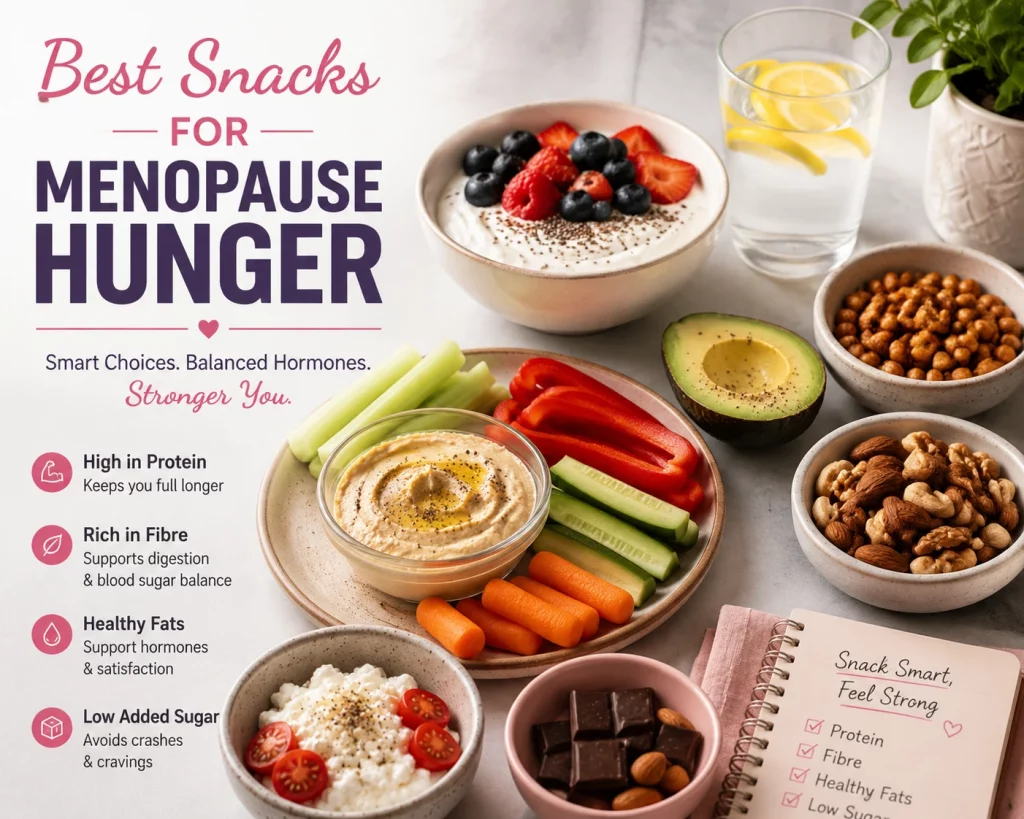
Before diving into specific snack ideas, it helps to understand the four qualities that make a snack genuinely supportive during menopause.
Protein First
Protein is arguably the single most important nutrient for managing menopause hunger. It slows digestion, blunts blood sugar spikes, and supports the muscle mass that naturally declines with age. Aim for at least 10–15 grams of protein in every snack, whether that’s Greek yoghurt, a boiled egg, or a scoop of protein powder blended into a smoothie.
Fibre for Fullness
Fibre-rich foods slow gastric emptying, which means you stay fuller for longer and avoid the rapid blood sugar rise-and-fall that fuels cravings. Vegetables, berries, legumes, and whole grains are all excellent sources.
Healthy Fats
Fats like those found in nuts, seeds, olive oil, and avocado support hormone production and help you feel satisfied rather than merely full. They also slow the absorption of any carbohydrates eaten alongside them.
Low Added Sugar
Snacks high in added sugar might feel satisfying in the moment, but they tend to spike blood sugar quickly, followed by an equally quick crash, often leaving you hungrier than before you ate. Reading labels for hidden sugars is a simple habit that pays off significantly over time.
The Best Snacks for Menopause Hunger
Here are practical, real-world snack ideas broken down by type, so you can build a rotation that fits your lifestyle.
Savoury Snacks That Satisfy
Greek yoghurt with cucumber and everything bagel seasoning- high protein, low sugar, and genuinely filling.
Boiled eggs with a pinch of paprika – portable, protein-packed, and easy to prep in batches.
Hummus with raw vegetables – the fibre and protein combination keeps blood sugar steady.
A small handful of mixed nuts – rich in healthy fats and magnesium, which can also help with sleep and mood.
Cottage cheese with cherry tomatoes and black pepper – an underrated source of slow-digesting casein protein.
Sweet Cravings, Handled Smartly
Greek yoghurt with berries and a drizzle of honey – natural sweetness paired with protein and fibre.
Apple slices with almond butter – the fibre in the apple and fat in the almond butter slow sugar absorption.
A square or two of dark chocolate (70%+) with a few almonds – satisfies a chocolate craving without the sugar crash of milk chocolate.
Protein smoothie with frozen berries and a banana – a naturally sweet option that also delivers 20+ grams of protein.
Chia pudding made with unsweetened almond milk – fibre-rich, naturally thickened, and easy to prep the night before.
On-the-Go Options for Busy Days
Protein bars with under 5g of sugar – check labels carefully, as many “healthy” bars are glorified sweets.
Roasted chickpeas – crunchy, portable, and high in both protein and fibre.
Beef or turkey jerky – a convenient protein source with virtually no prep required.
Edamame – easy to pack, plant-based, and satisfying thanks to its protein and fibre combination.
Pre-portioned trail mix with nuts, seeds, and a small amount of dried fruit – balanced and easy to control portions of.
Snacks to Approach With Caution
It’s not about banning foods; restriction tends to backfire, especially during menopause when stress hormones already play a bigger role in weight and cravings. That said, a few categories deserve a closer look because they can worsen the very symptoms you’re trying to manage:
Refined carbohydrate snacks (crisps, white crackers, pastries) tend to spike blood sugar quickly, often leading to a rebound craving within an hour or two.
Sugary granola or “health” bars frequently contain as much sugar as a chocolate bar, despite their marketing.
Diet soda and artificially sweetened snacks may trigger cravings for sweetness in some women, even without delivering actual calories.
Alcohol-based “snacks” like a glass of wine as an evening pick-me-up can interfere with sleep and next-day hunger regulation.
The goal isn’t perfection; it’s awareness. Enjoying these foods occasionally, alongside a foundation of protein- and fibre-rich snacks, is a far more sustainable approach than an all-or-nothing mindset.
Sample Snack Ideas for Different Times of Day
Timing matters almost as much as food choice. Here’s how you might structure snacks throughout a typical day:
Mid-morning: Greek yoghurt with berries, or a boiled egg with a piece of fruit.
Afternoon slump: Hummus and vegetables, or a small handful of nuts with an apple.
Pre-workout: A banana with a spoon of nut butter for quick, digestible energy.
Post-workout: A protein shake or cottage cheese with fruit to support muscle recovery.
Evening craving: Dark chocolate with almonds, or chia pudding prepared earlier in the day.
The Role of Hydration in Menopause Hunger
Dehydration is one of the most common and most overlooked causes of false hunger during menopause. Hot flushes, night sweats, and increased fluid loss can leave many women running a mild deficit without even realising it. The thirst signal and the hunger signal originate from overlapping areas of the brain, which means it’s remarkably easy to mistake one for the other.
A simple habit worth building is drinking a full glass of water before reaching for a snack, then waiting ten minutes. Often, the “hunger” settles on its own. Herbal teas, sparkling water, and water-rich foods like cucumber, watermelon, and oranges can also help you stay adequately hydrated throughout the day, particularly if plain water feels unappealing.
Portion Awareness Without Obsession
One of the trickiest parts of managing menopause hunger is portion size, not because portions need to be tiny, but because genuine hunger cues can be harder to read clearly when hormones are in flux. Rather than rigid calorie counting, many women find it more sustainable to use simple visual guides:
- A palm-sized portion of protein
- A fist-sized portion of vegetables
- A cupped-hand portion of carbohydrates
- A thumb-sized portion of fats
These guides aren’t exact science, but they offer a flexible framework that adapts naturally to your hunger levels day to day, without the mental load of tracking every gram. Pairing this approach with the protein-and-fibre-first principle covered earlier makes it far easier to snack appropriately without either overeating or under-fuelling.
Building a Snack Routine That Actually Sticks
Consistency matters more than perfection when it comes to managing menopause hunger long-term. A few practical habits can make smart snacking far easier to maintain:
Prep in batches. Boil a dozen eggs, portion out nuts into small containers, or make a batch of chia pudding on a Sunday so grab-and-go options are always ready.
Keep problem foods out of easy reach. If refined-carb snacks are hidden at the back of a cupboard rather than sitting on the counter, you’re naturally less likely to reach for them out of habit.
Pair, don’t ban. If you’re craving something sweet, pair it with protein or fibre rather than eliminating it. A small treat alongside a handful of nuts is far more sustainable than an outright ban.
Check in with your body, not the clock. Snacking on a rigid schedule regardless of hunger can override your natural cues. Aim to snack when you’re genuinely hungry, not simply because it’s “snack time.”
When Hunger Isn’t Really About Food
Sometimes what feels like hunger during menopause is actually poor sleep, dehydration, or stress in disguise. Cortisol, your primary stress hormone, can mimic hunger signals and drive cravings for quick-energy carbohydrates. Before reaching for a snack, it’s worth asking whether you’re actually hungry, thirsty, tired, or stressed. Building this awareness is one of the most valuable (and underrated) skills for managing appetite through this transition.
If you’d like to go deeper on this topic, our guide on Smart Snacking & Hunger Awareness During Menopause breaks down exactly how to tell true hunger apart from hormonal noise, plus practical strategies for building better snacking habits day to day.
How Strength Training Supports Appetite Control
Snacking choices are only one piece of the puzzle. Strength training plays a significant, often overlooked role in appetite regulation during menopause. Building and maintaining lean muscle improves insulin sensitivity, which helps stabilise blood sugar and reduce the intensity of cravings. It also increases resting metabolic rate, meaning your body burns more calories even at rest, supporting a healthier relationship with food overall.
If your nutrition and training aren’t currently working together, it may be worth exploring a more personalised approach through our nutrition coaching, which is built specifically around the hormonal realities of women over 35.
Frequently Asked Questions
Why am I so much hungrier during menopause?
Fluctuating and declining oestrogen affects appetite-regulating hormones like leptin and ghrelin, along with insulin sensitivity, which can increase both the frequency and intensity of hunger signals.
What’s the best snack for menopause weight gain?
Protein-rich, fibre-rich snacks with minimal added sugar, such as Greek yoghurt with berries, or hummus with vegetables, tend to be the most effective for managing both hunger and weight during menopause.
Should I avoid snacking altogether?
No. Strategic snacking, focused on protein and fibre, can help prevent the blood sugar swings that often lead to overeating later in the day.
Can menopause cravings be controlled without medication?
For many women, yes. Prioritising protein, fibre, sleep, hydration, and strength training can significantly reduce the intensity of cravings, though individual experiences vary and it’s worth discussing persistent symptoms with a healthcare provider.
Final Thoughts
Menopause hunger is real; it’s hormonally driven, and it deserves a strategy rather than sheer willpower. By choosing snacks built around protein, fibre, and healthy fats and by paying attention to the difference between true hunger and hormonal noise, you can navigate this stage of life feeling more in control, not less.
If you’d like guidance tailored to your specific body, symptoms, and goals, book a free discovery call and let’s build a plan that actually works for you.