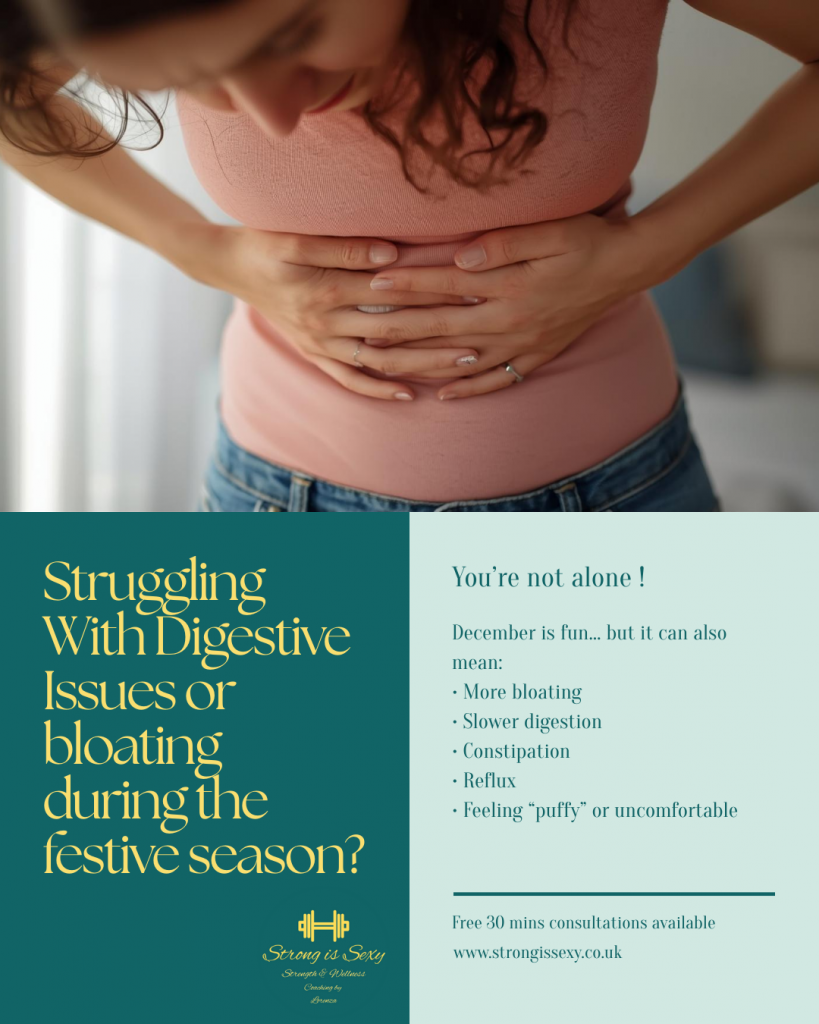
Why Digestive Issues Increase During the Festive Season
The festive season is full of joy, celebration, and—let’s be honest—a lot of food. From rich Christmas meals to endless social gatherings, it’s no surprise that many women experience digestive issues during the holidays. Bloating, constipation, sluggish digestion, and reflux become far more common this time of year, especially for women over 35 and those navigating perimenopause or menopause. Always so much worse digestive issues festive season
If you’ve ever asked yourself:
“Why does my stomach always act up during Christmas and New Year?”
—you’re definitely not alone.
Digestive discomfort in December is extremely common. Below, we’ll break down why digestion becomes more sensitive during the festive season, and what you can do to support your gut while still enjoying your favourite foods.
1. Higher Festive Stress Levels Slow Down Digestion
December is one of the busiest months of the year—deadlines, family commitments, shopping, hosting, events, and constant planning.
This increase in stress naturally impacts digestion.
When your stress levels rise, the body shifts into fight-or-flight mode, leading to:
• Slower gut motility
• Constipation
• Indigestion or reflux
• Increased bloating
• Irregular bowel movements
This is particularly true for women dealing with hormonal changes, where the gut-brain axis is already more sensitive.
How to support digestion during stressful periods:
✔ Take 6–8 deep breaths before meals
✔ Avoid rushing your food
✔ Create a 10–15 minute daily routine for walking, stretching or unwinding
✔ A walk post eating works wonders for insulin sensitivity
Small adjustments to stress management can dramatically improve gut function.
2. Eating Differently (and More Frequently) Affects Gut Health
Christmas and New Year naturally come with richer, heavier foods.
There’s nothing wrong with enjoying holiday meals—but changes in eating patterns can challenge the digestive system.
Festive eating often includes:
• Higher-fat meals
• Creamy sauces
• Desserts and sugary foods
• Fried or processed foods
• Larger portions
• More frequent snacking
These foods digest more slowly and can lead to bloating, reflux, and discomfort.
How to balance your meals without restricting yourself:
✔ Keep one meal a day balanced (protein + fibre + whole foods)
✔ Stay hydrated—dehydration is a major cause of bloating
✔ Add fruit or vegetables to two meals/day
✔ Prioritise protein whenever you can
✔ Take gentle walks after meals
You can enjoy festive foods while still supporting digestion.
3. Alcohol and Its Impact on Gut Health
Alcohol is a major contributor to digestive issues during the festive season. Even light-to-moderate drinking can:
• Irritate the stomach lining
• Disrupt gut bacteria
• Slow digestion
• Cause constipation or diarrhoea
• Increase bloating
Many women in perimenopause or menopause also experience heightened alcohol sensitivity, making symptoms even more noticeable.
Tips to reduce alcohol-related bloating:
✔ Alternate alcoholic drinks with water
✔ Avoid drinking on an empty stomach
✔ Choose clearer spirits if sensitive (vodka soda, gin with slimline tonic)
Your digestion will feel noticeably better with these habits.
4. Disrupted Routine = Digestive Discomfort
Your digestive system thrives on routine.
During the festive season, routines shift—sleep changes, meal timings move around, physical activity decreases, and hydration drops.
This combination can lead to:
• Slower bowel movements
• Irregular digestion
• Increased bloating
• Low energy
Simple routine anchors that help:
✔ Maintain a consistent breakfast
✔ Drink water before coffee
✔ Aim for daily steps or short walks
✔ Keep hydration steady throughout the day
Structure doesn’t need to disappear in December—just simplify it.
5. Hormonal Changes in Perimenopause & Menopause Affect Digestion
Women in perimenopause or menopause often notice their digestion becomes more sensitive year-round, but symptoms can intensify during festive eating.
Fluctuations in oestrogen and progesterone can:
• Slow digestion
• Reduce gut motility
• Increase bloating
• Trigger constipation
• Affect stomach acidity
Combine hormonal changes with festive foods, alcohol, and stress, and digestive issues become much more common.
Support your digestion during menopause:
✔ Don’t skip meals (this worsens bloating and blood sugar swings)
✔ Include protein at every meal to stabilise hormones
✔ Consider magnesium for bowel regulation
✔ Prioritise sleep and stress reduction
✔ Add fennel & peppermint tea to your shopping list
Your hormones and gut are closely connected—supporting both makes a significant difference.
Contact us at www.strongissexy.co.uk
Practical Tips to Reduce Digestive Issues This Festive Season
1. Eat slower than you think you need to
Fast eating increases air intake and bloating.
2. Walk after meals
Even a 10–15 minute walk can dramatically improve digestion.
3. Start with water + protein
Regulates appetite, energy, and gut function for the entire day.
4. Don’t “save calories” for big meals
Arriving overly hungry leads to overeating and discomfort.
5. Support your gut—don’t restrict yourself
Enjoy your favourite foods while balancing habits that help you feel good.
When to Seek Support for Digestive Issues
If you frequently struggle with:
• Severe or persistent bloating
• Constipation or diarrhoea
• Painful indigestion or reflux
• Irregular bowel habits
• Symptoms that worsen with stress
• Digestive changes during perimenopause or menopause
…it may be time to seek personalised nutrition and lifestyle guidance.
Many women don’t realise how strongly digestion is influenced by hormones, stress, meal structure, sleep, and nutrient balance.
Inside Strong Is Sexy, I help women 35+ understand their digestion, reduce discomfort, and finally feel in control of their bodies.
Final Thoughts: Enjoy the Festive Season Without Digestive Stress
Digestive issues during the festive season are incredibly common and completely normal.
With the right strategies—hydration, balanced meals, gentle movement, better stress management—you can enjoy your food and feel comfortable in your body.
If bloating, low energy, or digestive discomfort are affecting your daily life, I’m here to help.
Send me a message or visit www.strongisexy.co.uk for personalised support.
Lorenza x